


Stephanie (click title above for link) had an interview on her blog and suggested that if anyone else wanted to be interviewed that she would do the same. I went for it. Here's the format:
1. leave me a comment saying "interview me"
2. I will respond by asking you five questions, selected for you.
3. you will update your weblog with the answers to the questions.
4. you will include this explanation and offer to interview someone else in the same post.
5. when others comment asking to be interviewed you will ask them 5 questions.
So here are my questions from Stephanie:
1. What feminine characteristic of God do you see most clearly today?
Mystery. It has been hot and hazy down our way these past few days. When sun shines, earth steams. Pollen count is high. The river is covered with a yellow veil, carrying fertility downstream. When the clouds roll in, the air is heavy, pregnant with rain.
These are days in my life when I see through a glass darkly. I hold the miracle of baby Robbie in my arms. A mere four months ago we wondered if he would survive. Now he's triple his birth weight and healthy. I am blessed by his being in the world. Still, I cannot know his future. I live with uncertainty, as do we all. The endless shrouded mystery of birth and life and aging and dying.
My mother is failing once again. Her death may come today, or a week from now, or six months or six years. She reaches into the past for her parents and siblings, all of whom are long in heaven. My mother forgets this and wants to contact them. I wonder if they are calling to her from the other side, coming close to her as she lingers here. Such are the mysteries, the feminine face of God...the beginning and end stages of life, the unknown vastnesses of birth and death, which I, as women before me, patiently attend.
There is an anticipation that the heat wave will break with a tremendous exhibition of power: thunder, torrential rain, wind. God may be felt in earthquake, tornado and fire. But for the moment, my world is heavy with Mystery and I must content myself with waiting for revelation.
2. you have a depth of knowledge that amazes me. What lit the fire for you to accumulate this depth of understanding in life?
Suffering. The fact of suffering is not easily answered by fundamentalist theologies. My own infertility challenged the pat notion that if one is good and follows the rules, then God will respond by showering blessings in just the way we demand. It isn't true. Rain falls on the just and the unjust. Faith is accepting the reality of God in the midst of uncertainty, misfortune, and suffering.
So, I began a search for God which went beyond 'walking the aisle' and 'accepting Christ as my Saviour.' I had done these things as a young child. And God was calling on me to minister to others who had done the supposed 'right' things, and yet had experienced broken marriage, mental and terminal illnesses. People who were cut off from significant members of their families. Who were confused in sexual identity. Who were other. Who were lonely. Whose children became addicts, attempted suicide, ran away. People who had been sexually abused as children. Who had suffered the indignities and atrocities of war. People who were abused by the Church and handicapped by rigid and unproductive ideas about God. In order to walk with these people, I had to develop an understanding of God which which encompassed their present circumstance and suffering and offered hope. In doing this, I was led out of Law and towards a deeper understanding of Grace.
Suffering lit my fire to find a living, breathing God. A God Who Is Here and Now. In the suffering place. In the place of Joy. I read voraciously. I observed human nature. I watched and listened for God everywhere, and I still do.
3. What is different in your life since you took the Path at Linwood House last year?
Beauty. Permission, even vocation, to express Beauty. At Linwood House, I came out of the closet. Forget about Truth, for me, although I respect those who seek it and long for it. Give me sunsets not prooftexts. Give me crocuses not religious conventions. Give me Beauty.
Truth is Beauty, for me. Not of course, an original thought. But freeing. In the world I inhabit, where pain meets me in the faces of those I serve, it had always seemed a little self indulgent to love beautiful words, to admire beautiful things, to tremble at beautiful sights and sounds, to want to create beauty in a vase of flowers, on a canvas, in a poem. But I do, and always have, secretly, covertly. And yet Beauty is a transcendent aspect of God. It lifts us to the Eternal.
Once, I worked with a woman who had lost her twenty year old son in a horrific traffic accident. Her grief was profound and palpable. She was haunted by a vision of her son's crushed car being hauled away in a pile of other wrecks. As we worked with this traumatic image, I asked her to imagine her favourite flowers for a healing visualization. Her flowers were white roses. I asked her to begin to deck the destroyed cars with roses, one at a time, and then in their hundreds, until she had covered the wreck of her son's car with this beautiful tribute. She did this, and added a cross of flowers over the tailgate in her mind. She repeated this whenever the image came to haunt her, and slowly its horror lost its grip. In the spring she planted an all white memorial garden at her home to honour her son and to mark a step in her healing journey.
I thought, for several years, this intervention was a fluke, a sort of fleeting moment of inspiration, which just happened to work. But now I'm out, I see the truth of healing in Beauty, and how it is at the core of what I do.
Beauty can be present in hazy, humid weather. It can be part of the healing of great loss. It is not an accessory but a necessity. In the deep, safe Beauty of Linwood House I received encouragement to claim my love for Beauty and my intuitive sense that Beauty, in all it various forms can heal. I am called to be a lover and creator of Beauty in the world.
4. What challenges you most about blogging?
a) Technology. Without a doubt. My struggle with technology continues to hold me back. But I blog on anyway.
b) Staying true to myself. I tend to wander off topic sometimes in my comments. I try to be erudite. Clever. I sometimes speak in borrowed language (I do not mean plagiarize). I mean a voice not my own. I come from my head and not my heart...well, really in truth to myself, I want to come from both. At my worst, I try to be logical. In fact, I try too hard altogether. Being true to myself means letting love flow out and language come as it will, almost bypassing thought and effort.
5. If you could see one lie about women in the Body exchange for truth in your lifetime what would that be? (There may be many but is there one predominant one?)
Recognition of Prophetic Voice of Women. I think that the Body has generally accepted women when they have the gift of helps, tolerated them when they have the gift of teaching, and patronized them when they have the gift of prophesy. This is demeaning and a lie. Women's prophetic voices have validity, all the more because they express things differently from males in the Body. We need that difference.
Science has shown that the connectedness between left brain (intuition) and right brain (logic) is more fluid in women. Women cross back and forth between these aspects of thought with greater ease than men. I believe this gives women a special facility in speaking prophetically, and I believe that the Body would be greatly enriched by listening carefully rather than dismissing the voice of women. I believe God is calling young women and older women to speak out on issues of justice and righteousness, polity and politics. The woman as prophet is not without precedent biblically. I think her time has come in this twenty-first century and I hope I live to see this happen.
Thanks for the great questions, Stephanie.
Monday, June 13, 2005


Sunday, June 12, 2005
*#%@&*
Help!
The more firewalls I get, the more persistent and perverted the spyware becomes. My blog has been targeted somehow. Is nothing sacred???? Don't know if reading this will corrupt you. I suspect not, since I am avoiding the words which seem to have attracted notice. Two of them appeared in my masthead. Had to edit at the cost of language clarity and symmetry.
But...seems I can't use simple words like l-ve, fr--ndship, g-mble or even less common words like enigm-tic. Pop-ups having to do with l-ve, fr--ndship arrive with inexhaustible regularity. You can imagine how perverse those are. My blog about G-mling at Home Depot...innocent in and of itself seems to have attracted the most lurid, cheap and sensational on-line c-sino -ds. I have no idea what comes up because of the word enigm-tic. I've started to delete blogs and that seems less than satisfactory. I feel like a member of the underground trying to keep clear of the Naz-s. Don't want to spell in full for fear of inviting white s-premic-sts. Which obliquely suggests to me that the word enigm-tic is targeted because of Enigm-...you know, the famous WW11 decoding device. My blogs are certainly going to look like cod- if this goes on much longer.
It seems our combined household computer knowledge is insufficient to the g-rgantuan task of keeping our computer clean. The last tr-p to the pro shop deleted Bloggerbot, something I value. I know. I know.
I am too left brained for this task. Left, closest to the H-art...non-linear, divergent. People get this wrong all the time. They think left and right brain equals left and right politics. Wrong. See what I mean? How can a person like me really exist in the twenty-first century?
Anything underlined in this blog will instantly connect you to something neither of us asked for. Go directly to j-il. Don't cl-ck. Don't pass go. Do not collect two h-ndred d-llars.
I'm going to have to go back to pen and -nk.
Thursday, June 09, 2005
Scribbling in the Dirt
One of my favourite sites for meditation, continuity and connectedness is the Northumbrian Community. (Click on blog title for link.) There I was reminded once more of this story from John 8.
v. 3ff. The teachers of the law and the Pharisees brought in a woman caught in adultery. They made her stand before the group and said to Jesus, "Teacher, this woman was caught in the act of adultery. In the Law, Moses commanded us to stone such women. Now what do you say?" They were using this question as a trap, in order to have a basis for accusing him. But Jesus bent down and started to write on the ground with his finger. When they kept on questioning him, he straightened up and said to them, "If any one of you is without sin, let him be the first to throw a stone at her." Again he stooped down and wrote on the ground. At this, those who heard began to go away one at a time, the older ones first, until only Jesus was left, with the woman still standing there. Jesus straightened up and asked her, "Woman, where are they? Has no one condemned you?" "No one, sir," she said. "Then neither do I condemn you," Jesus declared. "Go now and leave your life of sin."
Love it. The drama. The details. The denouement.
I love the way the crowd creeps away...the older ones first. What an interesting fact! It gives this account such a ring of authenticity. Perhaps the elders had a sharper remembrance of their sin. Perhaps, to give them credit, they acted responsibly in leadership with their tacit confession.
And of course, that enigmatic writing on the ground. There's been much speculation around what Jesus may have written. I dare to suggest...NOTHING AT ALL. He was scribbling, if you will. Making bubble letters of "The Law. The Law. The Law." Gaining time. Time to think of a just answer to the trick question. The religious leaders counted on a knee jerk response. But Jesus wasn't much given to impulse. He doodled and dawdled. The doodling provided distraction. It diverted the attention of the hostile crowd from the imperiled woman towards himself. Which is precisely what he does with all our sin. "Don't look at the sin," he was saying symbolically. "Look at me." And in that climate of acute shame, his lowered eyes and thoughtful mood, detoxified the intensely shaming focus on the woman. As it does for us all.
And so he mesmerized the crowd. Trick for trick. His doodling had a hypnotic effect and his answer, when it came, paralleled his actions in paradoxical complexity. "Let the one who is without sin, cast the first stone." And he let the people slip away as he lowered his eyes, and scratched in the dirt. He would not shame even the judgmental and the overscrupulous with his intensely truthful eyes.
I like to think Jesus tact, his averted gaze, calmed the woman, fascinated her. This moment was the beginning of her healing, providing her with respite before certain doom.
Jesus was never contaminated by sin or dirt. Healing a blind man with spittle mud. Washing his disciples dirty feet. He was earthy. He valued the essence of this basic life element. Dirt. Perhaps his actions signalled symbolically the mortality of us all. We come from dust and to dust we will return. Who is without sin?
There is something childlike in this picture. Something pure. Playful, even, were it not a life and death situation. And we could almost believe Jesus discounted or trivialized the sin, if it were not for his challenge to the woman. "Is there no one here to condemn you?" There is an implication in her remaining there alone. She is the one who condemns herself. As we all do. All too frequently. He takes the matter seriously. "Neither do I... Neither do I. Go, leave your life of sin."
I think I'll give myself some time this summer to doodle in the dirt. Fill a sandbox. Make mudpies. Dig deep with my grandchildren. Paddle about with squishy lakesilt between my toes. I shall think of the freedom of living without condemnation. I shall celebrate healing and forgiveness and acceptance and love. I shall distract myself from my own legalism, from obsessive guilt, from judgment of self and other.
I will take a dust bath of grace. And give myself time to think through the tricky questions, and revel in paradox. There is no condemnation.
Monday, May 30, 2005
The Ancient Lamp In My Hand


This lamp is sacred to me. It connects my microcosm with antiquity and eternity. It lifts me beyond time.
An object at once both common and rare, the equivalent of a candle in a modern home, it is found in abundance in every Middle Eastern archeological dig. My parents bought two such lamps as registered artifacts when they participated in an educational dig. One lamp was perfect, soft orange clay in colour and possessing its handle. One was this lamp. It was not in a spirit of preferring one another that I chose this lamp. I had fallen in love with the lamp which showed most clearly the marks of its use. My brother received the perfect lamp.
It was a lamp like mine, which Jesus warned the disciples not to hide, but to set out where all could see. It was a lamp like mine which the virgins in the parable carried to the wedding feast. One can understand why it was so important for the women to carry extra precious oil. Just a few drops fill the lamp.
The flame is smudgy, reminding me of incense, of prayers going heavenward, of praise and cleansing. I wonder if some ancient residue of oil has survived. Could I be mingling my twentieth century prayers with the practical thanksgiving of some first century homemaker?
Let it be so. Let there not be a limit to prayer. Let it flow backward and forward through time and across the barriers of space and limitations of place. Let there be Light.
Thursday, May 19, 2005
The Two Thousand Year Old Lamp
This morning I lighted a lamp. An ancient lamp. More than two thousand years old. A tiny lamp, small enough to cradle in the palm of my hand. A lamp blackened by age and fire, its finely incised decorations still visible despite millenia of burial and abuse. A broken lamp, showing a rust red scar where the tiny handle had once been. I lit this lamp.
I thought of all the years I had delayed lighting the lamp. Putting it off until some special day, some day worthy of marking. And how at that moment, on a perfectly ordinary morning I was rekindling a flame long dead. It was an act of ritual devotion. A greeting to the morning, to opportunity, to hope, to life, to Spirit.
I celebrated the unknown hands, the women, who had held this lamp in just such a way, and tended its wayward light. I saw how it must have looked, tucked into a crevice in the hardened dirt walls, illuminating the inner space, where family met perhaps to rest at the passing of a long day. It cast long shadows to my present.
Since it first came into my possession, I have waited a mere quarter century to light the lamp. Trembled at the prospect of a burning bush experience. Delayed. Procrastinated because the thing required some work, some preparation of wick and oil. I might not do it right. It might not light afterall. Now in the afterglow of Pentecost, I have simply lighted the lamp.
Scent of sandlewood oil rose in the warmth of the flame. I was one with scent and lamp and flame. New beginning. New and Ancient Presence. For a brief moment. Then the light flickered, flared, faded and died. I felt a brief a sigh of disappointment, then determination to light the lamp again. And again. And again. Until I get it right. Morning and Evening I Will light the Lamp.
Wednesday, May 18, 2005
Clear Conscience
THE LITTLE PERSON IS NOT POWERLESS. WE CAN BE HEARD. Write. Write. Write.
Canadian politics does not capture world imagination, my dear American friends. We can barely control our own apathy. However, at present, the government finds itself in a minority position in the House of Commons and the opposition is threatening to 'bring it down.' Most Canadians want government which works. Something is clearly not working in Ottawa. The balance of power is held by three independent members whose votes are endlessly courted. A member of the opposition crossed the floor yesterday...so the imminent threat of another election has been stayed. However, before that happened I ranted off a letter to the CBC. It was chosen as letter of the day for May 16, 2005. Click on the title above to read my letter in context, or read it as is, below:
LETTER OF THE DAY | May 16, 2005
"We need honour, loyalty, the courage to admit mistakes, the vision to correct them. We need politicians of principle. We need parties that will work together for the common good of the people."
Mr. Kilgour thinks there is a clear consensus for an election. It appears, since the votes of the independents are needed to bring down the government, that Mr. Kilgour, and not the people of Canada, hold the power to bring about this decision.
This is Mr. Kilgour's fifteen minutes of fame. Does self-interest or truth motivate him? Will he be returned in this now seemingly inevitable election?
WHAT WE NEED IN CANADA IS NOT A CLEAR CONSENSUS BUT A CLEAR CONSCIENCE!
We need honour, loyalty, the courage to admit mistakes, the vision to correct them. We need politicians of principle. We need parties that will work together for the common good of the people. We need politicians who will set aside narrow personal interest for the sake of fairness and good manners, as Ed Broadbent did in his recent abstention.
Canadians are tired of the behaviour of politicians. We are ashamed of the carping and sniping across the floor of the house during question period. We are exhausted by inquiries that drain the public purse and produce, not justice or improved policy, but endless posturing, rhetoric and constant national anxiety.
We are quickly becoming a neurotic nation, twitching and writhing in our own endless self-examination and bearing the collective shame of our elected officials.
Where are the clean hands and pure hearts?
Amongst the BQ, who if elected to power, would set as a first priority the dismantling of the nation? In the compromising Conservatives, who in their quest for power are willing to sacrifice social programs that define our national identity? With the fratricidal Liberals whose only possible defence in the present situation is ignorance? With the NDP whose idealism has grown weary in waiting and whose only hope of influence is functional minority government?
Mr. Kilgour please, not consensus but conscience.
If we must have an election, then let us have the courage to fight it based, not on the performances of past governments, but on the reform of parliament itself. Let the self-righteous remember their own follies and the dishonoured their higher goods.
Let us have humility and grace and an honesty that goes beyond facts to intentions. Let us have clear consciences, and a moment of silence.
Connie Knighton | Bracebridge, ON
Sunday, May 15, 2005
Now I Know Why They Call It Bile
It's bile to rhyme with vile.
I've been feeling off for some time now. Had periodic bouts of what the unfeeling call the 4F disease: female, fat, forty, flatulent. Heart burn. Pain in the right upper abdomen. Biliary disease. Gall bladder. Things escalated. Now its acute long lasting unrelieved pain radiating into the back, low grade fever, chills, nausea, vomiting. I diagnosed myself and went into the doctor for confirmation. I have always found this the best way to operate. Saves time. Saves mistakes. Saves unnecessary tests.
I have seen the little 'pearls' in the ultrasound with my own eyes. There is no doubt. Except, when it will come out. I should hear about that soon. Too bad I'm not an oyster.
All of this, of course, has caused me, word lover that I am, to consider the traditional uses of the word 'bile.' I fully understand how this word came to mean "ill-temper or peevishness." Like the word 'spleen' and other visceral metaphors, bile found its secondary meaning through the ancient attribution of temperament and character traits to bodily functions. Believe me, there is some truth to these superstitions.
I have been increasingly irritable, easily aggravated, impatient, negative and jolly well angry as the weeks have passed. That is why I haven't visited some of your blogs recently. I may spit out invective when I mean to be kind. I may blurt unthinkingly. I may criticize. Blessing is far from my lips.
Now is it chicken or egg? Did my melancholic and choleric leanings foment the disease? Or did the disease create my distemper? Is this vile mood something I should repent of immediately, or trust it will disappear when the surgeon cuts out the offending organ?
Spare me your pity.
Wednesday, May 04, 2005

Tuesday, May 03, 2005
Sneak Preview : As In A Mirror
We had a sneak preview of heaven last week. Rob met a man from the past. Someone we had worked with when he was a teen. Someone we had not kept in touch with over the years.
We had found our work with children and adolescents rewarding but somehow incomplete. Unpredictable work. Often unappreciated work. Exhausting work. By its nature, it was work for which we had not always followed the outcome. We seldom knew how stories ended.
This is what my husband learned. This man from the past had been part of our camp staff when he was a young teen. A pot boy. (Talk about unappreciated work!) For whatever reason, now thankfully shrouded in time, we had fired him. Gulp! But the following Christmas, seeing his potential, we had cast him as the lead in a play. And the following spring, when he applied again to work at camp, we hired him, and he had a terrific summer. The trust we invested bore fruit.
Wracked with tears of joy and relief, my husband told me 'the ending". This man had treasured our years together. They were life changing for him. And now as a mature person in ministry, he used these experiences as a benchmark. "All my life," he told Rob, "all my life I have used this as my model for what forgiveness is all about."
Oh God, how blind we are. How little we know what we do. Somehow, we do right, almost by default. Unknowingly. And most of the time, we have absolutely no idea of the impact of our actions on the lives of those to whom we minister.
There are othe elements to this story which are highly personal and not mine to share. But this revelation touched both of us deeply and heaven's doors slid open just a crack. For a moment we were permitted a glimpse of face to face, the Love of God working itself out in a life.
1 Corinthians 13:12
Now we see but a poor reflection as in a mirror; then we shall see face to face. Now I know in part; then I shall know fully, even as I am fully known. NIV
"Through a glass darkly."
What could it mean?
Mystery.
Promise.
Comfort.
We grasp for reality,
struggle to shape meaning,
to see God at work.
Then Purpose reveals
Love
magnified in the mirror.
Clarity.
A Divine moment
of face to face,
and sneak preview of heaven.
Constance 3/5/05
Friday, April 29, 2005
I.T. & Identity
Okay, so I have been living in sin for thirty-seven years. Reading the form letter, it appeared to me that whoever has been researching our case was researching the years 1945 - 1949. This would mean that the bride and groom in question were married either before conception or some where from birth to two years of age. The Ministry involved has been sent a sharp letter from Rob. When he recorded that I own not a single piece of official paper in my birth name, except for my birth certificate, I felt a little sad.
That led me to consider how, if we had been married just a few short years later, I would have kept my birth name. In 1967 it wasn't done. I ponder whether it would be worth my going back to my liltingly musical, so called 'maiden' name. Or would this add further to my identity issues? But then, if we are not registered as being married, are all my documents in a false name? Am I still Connie Ballantine and do I really have the option of remaining so?
The really scarey thing is that the United States government seems to have more information about us than our own government!!!!! In crossing the border 18 months ago, my husband was questioned about his place of birth, his High School and Universities, professions and so on. The AMERICAN BORDER GUARDS appeared to have this information in their computers, at their finger tips. WHY DOES THE CANADIAN GOVERNMENT HAVE SUCH A DIFFICULTY WITH I.T.?
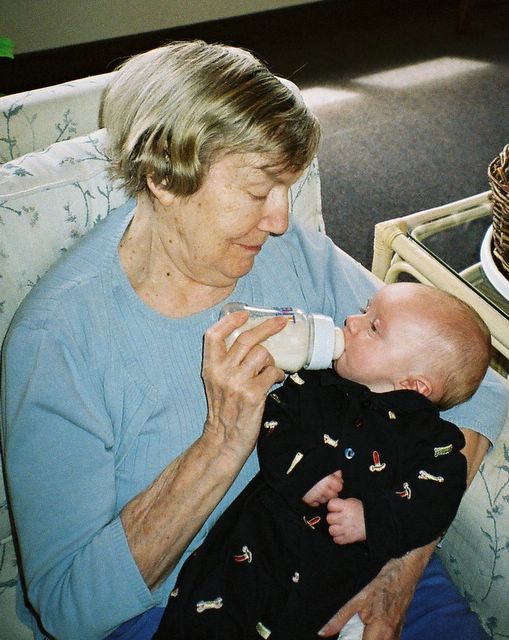
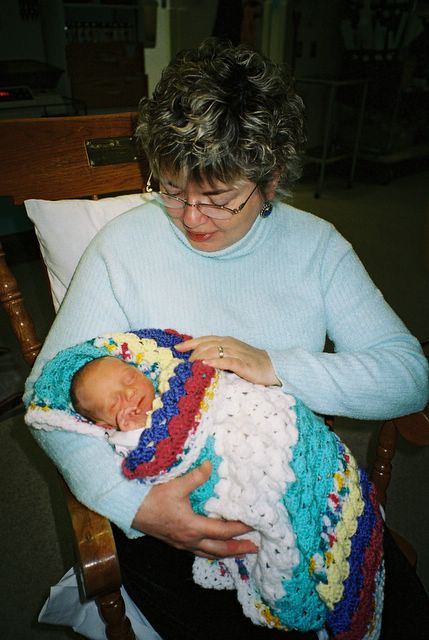
Anyway, I am attempting to gain confidence by improving my computer and blogger skills. I'm blogging family pictures for those who know me well. I have to do this over and over in order to get the skill down. And Deb Sawyer has given me info to help me with my Links section. So I'll be fiddling around with these tasks. This should distract me from the fact that my identity seems foggy.
Thursday, April 28, 2005


Wednesday, April 27, 2005
Living In Sin For Thirty-Seven Years!!!
Okay, so we were babies. That means that there are still many people living who were present at the ceremony on October 14, 1967. If you are one of these, or anyone else having any knowledge whatsoever of this event, will you please register your assent as a comment. A mere, "Yes" will suffice. Some of you will remember the festivities quite well.
The bride was slim in an off-white slubbed linen gown of medieval simplicity. When she spoke, it was with the voice of a maid. The groom was handsomely boyish, exuberant and tall in formal morning dress. He carried himself with the charm and grace of Robin Hood, which may also account for the fact that he nearly arrived at the church sans shoes. The officiant, a serio-comic figure of Friar Tuck proportions and baldness, was suffering from a bilious attack. In severe pain, sweating profusely, but otherwise masking his discomfort for the sake of his young friends, he presided over the service with dignity. There was a distinct odour of sanctity about the vows. There were times in ensuing years, that the couple wished the Friar had omitted his prayer asking God not to spare them suffering so that they might be compassionate. But the marriage 'took.'
Several lifetimes passed. The groom, applying for a pension, is told to produce a marriage certificate in order to assign beneficiary rights to the bride of his youth. Fourteen moves, two children, two dogs, two cats, two hamsters, a thousand clean-outs, a flood, a fire and the marriage certificate is no where to be found. A quest is initiated.
The church in Windsor, Ontario has been amalgamated. No records exist for 1967. Church archives in Toronto have no records of any marriage solemnized in that church from the years 1960 - 1972. And the pension will be witheld unless Robin Hood can establish the legality of his marriage. He is told to say he has been LIVING COMMON LAW FOR THIRTY-SIX YEARS and furthermore to PERJURE himself in front of a Justice of the Peace in this respect! Anyone knowing Rob will know how impossible this will be for him. He himself has conducted dozens of weddings over the years. What would this do to his credibility? Furthermore, he is told that he cannot SWEAR to the validity of his marriage in front of a Justice, even though this is the TRUTH.
Many phone calls and letters later, it is allowed that a senior offical of the Church may confirm by letter that the marriage took place. This is graciously done. The pension is granted and the aging honeymooners decide to apply to the government for a copy of their original certificate.
More than a year passes in which the officials in Thunder Bay do not cash the cheque for the copy. Nor do Robin and Marian hear anything at all from the Registry. From time to time, they think of their request, lost somewhere in bureaucracy. A feeling of unease arises. This intensifies when Marian is told that her SIN card cannot be replaced unless she produces a marriage certificate. The government has accepted her income tax for thirty-seven years in her married name. Her post secondary degrees were granted in this name. Her children were registered under this family name. If she is not legitimately married, she wants her taxes back!
Today a letter arrived from the Office of the Registrar General indicating that no record of this marriage exists. What could this mean? They are each free to marry another??? Legally yes. Morally no.
If the wedding described above seems real enough to you and not a mere dream, please indicate this in the comments. Your affirmation might just release Robin Hood and Maid Marian from their present nightmare. Maid Marian, in particular, is suffering a severe identity crisis.
Thursday, April 14, 2005
Holding in Prayer
Spencer stretches,
accepting love,
long limbed,
arms round my neck,
feet past my knee.
Gives butterfly kisses.
Rachael sits by my side,
practicing grown-up independence,
then clings coyly
and hides her head
at the hint of strangers.
Robbie smiles at his Papa’s voice.
He’d let us hold his babyself all day.
Sometimes we do.
Other children. Other times.
My own children when they were young,
growing in my heart.
The special ones I lift from a distance,
offering a surrogate mother’s prayers.
Jude who died.
Kaitlyn with leukemia.
Healthy Matthew,
tucked under a paternal arm.
And Audrey,
named for a Nana gone to heaven.
My own mother holds the infants
becoming once more herself,
nurturing generations.
Time doesn’t matter, nor language, nor infirmity.
Later, she falls asleep
like a child herself,
in my arms
on her narrow bed.
She stirs and wakens slowly
as if we had forever.
One day, we will.
Shall we hold each other in Godspace,
kindred and friend,
in God’s place?
Shall we gentle all little children with our prayers?
Wednesday, April 13, 2005
Eaten Posts
My computer has eaten two different posts today.
I'm miffed.
Just checked and it hasn't eaten this one. So insignificant. Neither profound nor beautiful or even silly. Think I'll publish.
I'm miffed.
Just checked and it hasn't eaten this one. So insignificant. Neither profound nor beautiful or even silly. Think I'll publish.
Thursday, March 31, 2005
The Dining Room Suite
I remember when my parents bought it. A mahogany Duncan Fife style, reproduction, dining room suite by Bassett. They went shopping at Tepperman's. An adult's only expedition. But the excitement surrounding the suites' arrival was visceral.
There had never been a dining room suite because there had never been a dining room before. The 1950's house my father built had a kitchen with a bay window and built-in, restaurant style banquette, upholstered professionally by my mother. The table with dropped leaves for expansion and crafted by my father, was clear birch on a wrought iron pedastal. So my mother, blessed with the gift of hospitality, had for years, entertained at our kitchen table. A dining room for entertaining and a proper dining suite was a luxury which she anticipated when we moved.
For over forty years, the dining room suite has been central to our family celebrations. Christmases, all high holidays, birthdays, anniversaries and showers have been commemorated around this festive board. The suite had a sideboard for serving and a bow fronted china cabinet, both with lots of storage. The chairs, my mother claimed, were never the chairs which they had been shown when they purchased the set. In typical fashion, my parents didn't want to make a fuss and never followed this up. Recovered several times by both my father and me, the chairs did show the least elegance and the most wear and tear of all the pieces in this set.
So now, it falls to me to make the decision to sell the suite in order to make room for more guests at Dawsonwood Cottage. It is not a decision which everyone in the family greets with joy. The dining room suite has meaning somehow beyond itself, representing family unity, good times, times of struggle. Conversations. Great gastronomic creations.
The table moved into the living room to make room for a hospital bed when my father was dying. My mother's fine china watched over him as he slept. At the dining table, my mother and I wrote our thank yous for condolence gifts and kindnesses. Later that same year, I would assemble wedding invitations for my younger daughter at the very same table. Over the last seven years, I have been the one to decorate the table at Thanksgiving, Christmas and Easter. Now I am the one taking it apart.
My mother is failing. Her meticulous entertaining finished. Her memory faint. She lives in a retirement home and visits to her former home are tiring for her. It is time for another of the many transitions which Judith Viorst calls Necessary Losses.
We all have remembrance, and I more than any. Perhaps that is why it is easier for me to let the dining room suite go. I remember when the delivery men carried it, reverentially, into our home. I saw it go out today, faded but still grand. Time for practiced detachment. Time for releasing. There's a few good Christmases left in that suite for another family. Let it be.
Sunday, March 27, 2005
Dying to Live Again
Have I missed something, or has the blogging community been largely silent about the Terri Schiavo dilemma? I probably don't read the right blogs. There has been an ocean of words in the press. Easter morning provides an opportunity to do the one thing we can do...pray with open hearts for everyone concerned.
If she dies
is Resurrection
defeated by the other side?
Weep we
in a darkened moment.
Then the Light.
C.K.
If she dies
is Resurrection
defeated by the other side?
Weep we
in a darkened moment.
Then the Light.
C.K.
Saturday, March 26, 2005
Daughter of My Daughters
Last night I sat up late with my daughters. The laughter was good. Storytelling was in the air. One of my sons-in-law heard there was coffee and stayed for the chat. We were too tired to stay up and too tired make the effort it takes to go to bed. I embarrassed them with my childishness. They surprised me with their wisdom, compassion, generosity and wit. What a delight then to open henrinouwen.org this morning to read a description of our relationship:
But a mother can also become the daughter of her daughter and a father the son of his son. A mother can become the daughter of her son and a father the son of his daughter. Father and mother become brother and sister of their own children, and they all can become friends. It doesn't happen often, but when it does happen it is as beautiful to watch as the dawn of a new day.
But a mother can also become the daughter of her daughter and a father the son of his son. A mother can become the daughter of her son and a father the son of his daughter. Father and mother become brother and sister of their own children, and they all can become friends. It doesn't happen often, but when it does happen it is as beautiful to watch as the dawn of a new day.
Thursday, March 24, 2005
He Shall Feed His Flock
For the last two weeks, in preparation for Easter, we've been listening to Handel's Messiah. It is a particularly wonderful recording by the Gabrieli Consort and Players, which attempts to render a robust, playful, passionate Messiah which is true to Handel's vision. I could listen all day to this exciting music. It calms me, energizes me, puts me in touch with God. The selection of texts is of course, appropriate to this season of the year, and one wonders how it ever came to be associated with Christmas at all.
Anyway, we (I mean Rob and I) have also been reading Parker Palmer on scarcity and abundance. Somehow when Palmer's words come into contact with Handel's music, the whole notion that "He shall feed his flock" comes alive. I am nurtured. Fed. My anxiety about a myriad family stresses disappears. I feel carried in Christ's arms.
When I was a child my uncle, a fine artist, painted a mural on the Sunday School walls. Jesus with the flock. I can see it still. Perhaps some would consider the image sentimental and dated now. As a child I was captivated by the larger than life size figures. It goes with Messiah, scarcity and abundance and Easter.
When my oldest daughter was about seven months old, we were ministering in a rural parish a long way from the place we call home. We spent a lot of time on the road going from town to town, visiting our outlying flock, holding small meetings, doing 'the work'. On one of these trips we pulled over to the side of the road to watch a flock of sheep with their lambs. It was snowing. A gloomy day, overcast and bitterly cold. We couldn't get out of the car, but our daughter waved and cooed at the lambies. The hillside was scarcely green, but the lambs frisked about. It was as if they were aware of the abundance which was their inheritance. They didn't look at all nervous that there wouldn't be enough grass when the time came. So Handel, and Parker Palmer, Jesus caring for the flock on the Sunday School walls, and newborn lambs on a stark hillside near Parrsboro Nova Scotia.
This year we have a new grandson, named Robbie after his Papa, whom he already loves. When Robbie was born he was very small and had to spend the first week of his life in hospital. The medical reasons for this are not important. What is important is that he is thriving today. At two months old, he is meeting his benchmarks and is close to double his birth weight. Abundance. Answers to Prayer. Jesus carrying the lambs. Handel. Parker Palmer. Sheep and lambs on a hillside in the snow.
Whatever the initial appearances, I do believe that there is enough and plenty. I have experienced this to be true this year. And this is my Easter blessing for you all.
Tuesday, March 15, 2005
Mornings are for Meditation
Wait and watch
as sunlight strengthens.
Winter fog like incense rises,
fades from white to palest blue,
disappears in morning skies.
Deep black pools form on the river,
lick the ice bridge from each side,
where yesterday
a feral cat
crossed safely to the other bank.
Hoarfrost
bright as teardrop winks.
Fear, loneliness,
and hurts past spent,
are warmed by Light
without, within.
Snowdrifts
heating at the core
weep silently,
give up their power,
shrink,
dry by degrees.
Underneath the eager moles
dig tunnels for quick escape.
And beaver free to swim at leisure,
dive under ice.
Primrose and crocus
plump and swell.
Sap soars.
Here is God,
and here and here.
In person, sky, and river and ground,
God releases Life Unbound.
Watching the Seasons Change
Thank God. A perceptible difference. A change. Dare I say, epiphany? More like spiritual Spring. All the little bits and pieces of my life are coming together. After a winter of nearly fifteen years, poetry is returning. I am painting again. I have stopped struggling after perfection. I have found that there is a growing place of ease in me.
What has made the difference? Willingness to trust God. A wise woman prayed with me (see Listening 3/12/2005). She asked if I had forgiven God...for the pain in my life, for disappointments, for a long life of depression, for inherited pain, for loss of career, for financial instability. I have so often felt angry with God, and known that was okay, but had never imagined "forgiving God." The irony being of course, that it is not God who needs my forgiveness, but I who need to forgive in order to be free from bitterness and the hold of the past. Inwardly then, I was resenting God. Trust in God and love of God were impossible. Commitment without loving trust, a long winter indeed.
So now I can claim what I think God has been creating in me all along. My world is not the macrocosm, but the microcosm. Not the public stage, but the private page. My vocation is to conceive and birth Beauty.
After nearly three years of trying to paint a large canvas landscape of a vast valley in Nunavit, I found myself painting a small card, and capturing the sense of this place in miniature. Similarly, I sketched the vast frozen space of lake Simcoe, the distant huts, the racing vehicles. With a few strokes, the essence was there, in a tiny picture no bigger than my hand. It takes a measure of trust to let these tokens go out into the world. Their insignificance is both their strength and a metaphor of Creator God's attention to detail, and grace at work in me.
So too, prayer is opening. I have let go of the striving to make my prayers conform to what I think I have been taught. I am trusting that God has placed a prayerful heart at the core of my being, and that God's Spirit prays within me. I give myself over to this praying...a jumble of faces and situations, intentions and longings. Why should my prayer life be any more linear than my left brained thought life?
There is holiness as I watch the river. I accept that deep winter is slowly turning to spring. I watch the seasons change and hold up the ever changing world to the One who never changes, who loves me when I cannot love back, who trusts me even when I cannot trust, who has placed his seal on me from the beginning of time, who knows my calling when I cannot hear it, and waits with me through a long winter for the discovery of spring.
Poem to follow in next post.
Saturday, March 12, 2005
Listening
I have spent the last week listening. During two days of solitude I listened to my own thoughts quieten. I realized how I am often deafened by worry, and paralyzed by the concerns of life. In quietness, apart from family responsibility it was possible to bring my will to focus on God. It was possible, also, to listen with my eyes, to record in watercolours some memories of spaces, places and times where I have felt at peace.
Then solitude was followed by other kinds of listening. I listened to lectures and to students practising the art of counselling. Sometimes betrayed by my ears, I tried to listen with my heart. Thank God for eyes and heart..to see gesture, posture, movements and tears.
And while I was listening to others, someone else was listening to and observing me. At the very end of the week, a new acquaintance, sensitive to God's voice asked to pray with me. She helped me to give voice to issues that have been lying silent in the back of my mind, issues related to trust and love and will. I suspect I will be writing about this in the next few days.
Imagine my surprise then, upon returning, that the Henri Nouwen daily thoughts were dealing with this very topic.
Henri Nouwen has written:
Listening in the spiritual life is much more than a psychological strategy to help others discover themselves. In the spiritual life the listener is not the ego, which would like to speak but is trained to restrain itself, but the Spirit of God within us. When we are baptised in the Spirit - that is, when we have received the Spirit of Jesus as the breath of God breathing within us - that Spirit creates in us a sacred space where the other can be received and listened to. The Spirit of Jesus prays in us and listens in us to all who come to us with their sufferings and pains.
When we dare to fully trust in the power of God's Spirit listening in us, we will see true healing occur.
For those who don't already know this site, Henri Nouwen's wisdom can be found at: http://www.henrinouwen.org
Thursday, March 03, 2005
Retreat
To all my faithful blog readers and lurkers:
I am going on a retreat for a few days and then participating in a workshop, so I will not be here at my post (ha, ha). When I get back I hope to be filled with Inspiration. Bless you all on your journeys.
Connie
I am going on a retreat for a few days and then participating in a workshop, so I will not be here at my post (ha, ha). When I get back I hope to be filled with Inspiration. Bless you all on your journeys.
Connie
Saturday, February 26, 2005
Beethoven's Hair
For access to the interactive site which tells this phenomenal story, click on above title.
I have Beethoven in my blood. So may you. Nightly, I was lullabied by his symphonies or for variation, a piano concerto. Passionate music. Provocative music. Music to woo a lover or win a war.
Da Da Da DUH. Da Da Da Duh.
In my family love of the music of Beethoven reached a profound level. Over the years we lived a sort of parallel Ludwigian existence. My father, given a musically gifted son, assumed the role of Beethoven's father. He had a passing resemblance to the great genius himself. If my father had let his hair grow, he would have looked like Beethoven. Alas. He did not. And he stopped short of waking my brother at three in the morning to practise.
My brother, one supposes, was to be the tortured genius. Given the painful exigencies of the real Beethoven's life, one wonders why we all entered into this legend with such whole hearted vigour. I think there was some belief in our family that it was necessary to suffer for one's art. No pain. No gain. I will stop short of saying that both my parents went deaf as an empathetic response to Beethoven in later life. But they did go deaf. The rigorous tutelege of young Ludwig was our family's template for life. And after all, our last name did begin with the letter "B." And my brother's name did begin with "L."
The long dead composer achieved sainthood in our household. Well, there was Jesus. And then there was Beethoven. Beethoven, writing Moonlight Sonata. Beethoven cutting the legs off his piano so that he could feel the vibrations of his music on the floor. Beethoven, stone deaf, being turned to face tumultous applause for the debut of his ninth and last symphony. Beethoven's sufferings somehow flavoured his music and made him real.
Then there was the fact of his personal habits, his temperament and lifestyle. I believe that loving Beethoven made us more tolerant of human weakness than we otherwise would have been. Fundamentalist. Evangelical. Teetotalers. He wasn't any of those things and yet we honoured him. Beethoven's foibles stretched us, made us think. Made us, somehow citizens of the world.
Wednesday, February 23, 2005
What day is it?
One day pushes itself into the next.
Always some tasks left over
to seed the agenda of the future.
Mail waiting for stamps.
Mail waiting for addresses.
Some things can't happen on the net.
Like thank-yous,
and personal care bills,
and posting videos.
And washing.
Those colour sorted piles,
extended in rows across the basement floor,
lie dormant for tomorrow.
People to be consoled.
Errands to run.
A well-meant promise to be kept.
They stand like scarecrows
in a field of days
stretching to infinity.
There must be a reason why
I chose this,
rather than that,
like Frederick Bueckner,
climbing his study stairs
and turning his back on
visible suffering
to do what may be a higher good.
Or I may be fooling myself.
Missed the day for blogger's protest.
Really a whole day went missing.
What was I doing?
Ah, babysitting.
And is this Wednesday already?
Is there a point to getting started this week,
or should I just wait until next?
Can I pick up a paint brush?
Can I write a story?
Can I further my vision?
Can I concentrate on God?
Can I admit I'm angry?
Saturday, February 19, 2005
Hagia Sophia
Return now to the subject of Sophia, the Spirit of Wisdom, because it is not far from the longing for liturgy which I have been clumsily attempting to address for the last two posts. I'm making this a short post because Thomas Merton has written a poem entitled Hagia Sophia which links his vision of Sophia both with the active work of God in creation and with the Holy Spirit and with Jesus. He does all of this within the framework of the traditional hours of prayer; lauds to compline. If you believe as I believe, that our worship is rooted not so much in knowing as in mystery, then Merton's poem is for you. If you believe, as I believe, that there is a feminine face to God, then this poem is for you.
Click on title above to take you to Thomas Merton's poem Hagia Sophia
Click on title above to take you to Thomas Merton's poem Hagia Sophia
Saturday, February 12, 2005
Longing for Liturgy: Part Two
I believe that my longing for liturgy began in childhood when I attended a cousin's confirmation. Such was my early fundamentalist indoctrination, that I felt a hum of terror as well as a frisson of curiosity while watching the proceedings. Were these windows "idols?" Were these carvings "graven images?" I let myself down into what was Holy Mystery. The service was scarey and wonderful. The colours, the candles, the organ and choir embraced me; spoke to the place inside me where God and Beauty dwelt. The air was filtered gold. The scriptures had a familiar cadence, but a deeper dignity than they achieved when we read them from well-worn "promises" around the supper table each evening.
It is not news that space affects and shapes worship behaviour, and visa versa. People move into a cathedral with a muted awe. There is little chat before service. The space invites contemplation. A large industrial space is conducive to contemporary worship with room for sound equipment, projection screens, dancing and moving about. The plain Quaker meeting house is perfectly suited to the prayers which will be spoken after silence. Given these differences, I wonder if denominations, rather than being a divisive, might be God's way of providing for varying taste and temperament.
In EVANGELICALS ON THE CANTERBURY TRAIL, Robert E. Webber urges us to be Christians first and whatever else we are, Baptist, Episcopal, Methodist (even "emerging" one supposes) second. This concept was compelling for me since the church where I worshipped had many "distinctives". There was a tendency for me to commit the sin of henotheism, placing the distinctives and governance of the church in the ultimate place in my life. God showed me that the amount of time I spent talking about the church, complaining about the church, strategizing for change in the church, were depleting my love of God. Indeed, my constant battle with the church was substituting for a truer experience of God in my life.
Webber asserts that the evangelical church arose, in part, as a response to scientific rationalism. Christianity needed to be rational. Sermons defend what properly may be accepted as Mystery. I remember an agonized flannelgraph retelling of "Jonah" which a zealous leader inflicted on our stunned congregation. In it he showed, with dimensions, that there was a fish large enough to swallow Jonah whole, what Jonah experienced literally in the belly of the whale, and how he, hairless and naked and scalded by stomach acids, was spat onto the beach. All irrelevent!
I find the liturgical church comforting in that it takes me into the creaturely space of not-knowing. God is great, compassionate, mysterious and bigger than me. I sense this in the vaulted space, in the art, in the grand music pulsing through wooden pews, through the timelessness of the service.
Never was this comfort more needed than when Rob and I found ourselves in England as tragedy stuck his family at home in Canada. His sister, thirty-two years old mother of three children under five, was killed in a car accident. Unable to return for her funeral, we sought out a place to be in prayer each day of our journey, stopping for evensong or attending morning prayers wherever we found ourselves.
The day before the funeral in Canada, we visited Westminster Abbey. In November, by custom, it is surrounded by a memorial to war dead. There were thousands of white crosses planted in battalions, complete with a separate section for padres who had given their lives in service. Hundreds of padres! Newly ordained pastors, we purchased a cross and placed it in memory of some unknown padre in some unknown place. We were strangely comforted by participating in this symbolic act. In its deepest sense, that is what liturgy offers, a symbolism which speaks to heart matters, bypassing the rational mind. This multitude of crosses and our own loss had a connection which would only be destroyed by analysis.
The Abbey, however, was not our ultimate destination on the funereal day. Crowded with tourists, it was more like a museum than a place of worship. No comfort there. Just to the left of the Abbey, stands St. Margaret's Chapel. There God's Spirit surrounded us and comforted us. The interior was womb-dark and one could kneel for a long time in quietness, undisturbed. I remember shaking uncontrollably. Neither could believe that this young mother, wife, sister, daughter...was dead. In agony and unknowing, we clung to eachother, comforted by the palpable eternity which surrounded us. This has remained a most sacred memory of our life journey. In our bereavement, we felt surrounded by clouds of witnesses, connected to past and future by the act of kneeling and reading and praying.
Thursday, February 10, 2005
Longing for Liturgy: Part One
This blog came out of reflections on bobbi's post Ash Wednesday in http://emergingsideways.blogspot.com.
It was another Wednesday of no particular significance in the church calendar. We were on our first holiday away from children, and found ourselves in romantic Charleston strolling cobbled streets in evening light. When bells began to toll, we followed the sound to a wonderful Episcopal church where earlier we had wandered among ancient tombs and pieced together stories of Colonial America. This time, we were not alone. From behind iron gates and painted doors in that museum perfect city, citizens of every discription emerged. A lady in a mink coat and diamonds, a poor man on crutches, a woman in a wheelchair, her friend, street people. There were young folk dressed in jeans and tees; older folk whose clothes, conservative and clean, had seen better days. There were children, holding hands with parents. White folk. Black folk. Gay and straight folk. A lot of hugging, waving and greeting as we all poured into the church.
Like Bobbi and Liam we were eyed with curiosity and welcome. We were greeted with a handshake at the door and carried willingly to places near the front.
It was a low church service of the kind we now refer to as "blended," a little guitar, a little organ. There was the usual juggle with the books. No matter. I didn't care if I got it right. I just soaked in the Spirit of the place, the clear intentionality of the worshippers, the focus on prayer and scripture, the beauty of the read prayers, the sincere tears at general confession, the release of absolution. The homily was a gentle reminder of our Christian duty within the world. With a full heart, I received communion, and let my tears of joy and longing fall unhindered.
I had been sneaking the restfulness of liturgy for years. It provided soothing contrast to the lively music, hearty singing, hand clapping, and "testimonies" of my home church. Read prayers were a considered change from the spontaneous, well-meant ramblings, which sometimes invited the Lord to endorse a narrow personal agenda. Communion drew my heart. Having grown up and served in a non-sacramental church, this act of ritual had special appeal to me. I loved the fact that one was not forced to walk the aisle alone, but that all those who wanted to receive came forward together. I loved that I participated in an act of worship which linked me to Christians around the world and down through history. The significance of this brought me to tears each time I participated. I could barely stand from the sense of holiness I felt in this...probably was very close being slain in the spirit right there in the Anglican/Episcopal church. This was the power of Communion for me.
Over the years, we have continued to seek out respite from evangelicalism in churches which have a highly liturgical service. Amongst the highlights: daily morning prayer at the little Anglican Church at Jackson's Point, Ontario; Christmas Eve in a Lutheran church in Florida; a memorial service for transplant donors at St. Michael's Roman Catholic Cathedral in Toronto; an Episcopal service in Savannah, the first Sunday of the war on Iraq.
We had crossed the border with some trepidation on the day the U.S. declared war. Strangely, there was no bottleneck, no added questioning. We sailed blythely on our way; Tybee Island, our longed for holiday destination. We had chosen Sunday as one of our days to tour nearby Savannah, and knowing from a previous visit that there was a church on just about every square in the old city, we had our pick. We began early, walking the squares, trying to sense the Spirit of each place, reading sermon topics on notice boards, noting times, praying. Our stroll took us to the Episcopalian Church. Somehow we knew we would feel at home.
It was a subdued service. We had expected perhaps, some flag waving, a chorus or two of God Bless America. No. It was a straight, right out of the book, Anglican/Episcopal service, with some resounding hymns and a homily taken from the lectionary texts for the day. (Rob has been preaching from the common lectionary for nearly twenty years. It forces him to come to terms with scripture, rather than riding any particular hobby horse. However, I stray.) So the sermon instructed us how we should live in the light of scripture. There is a place in the Episcopal service of prayer where names are mentioned specifically. It was there and there only where the war on Iraq was mentioned. It was acknowledged that some in the large congregation had relatives and friends who would be serving and be in danger. They were prayed for. AND THE IRAQI PEOPLE WERE PRAYED FOR. Simply. Lovingly. Non-dogmatically. Without prejudice. Kindly. The war had just begun, but there was healing in that place. The liturgy, the structure of the service had provided us all with safety from the urgency of the moment and placed us squarely where we should be in Kingdom goals and Kingdom ends. I am still thankful.
Some years ago Rob and I read a book called "Evangelicals on the Canterbury Trail: why evangelicals are attracted to the liturgical church" by Robert E. Webber. More about this later.
Tuesday, February 08, 2005
Speaking of Sophia, an open letter
Oh dear Stephanie,
I fear I may have opened a contentious issue. I love the way you use the names of God. Sophia is the feminine name for the wisdom of God. There is evidence that early Christians equated Sophia with the Holy Spirit. In the Old Testament, especially the Wisdom Literature, she is Wisdom and is closely linked to the wisdom of Solomon.
I am not an expert in this. Of course, some see that the patriarchal church has suppressed this knowledge of Sophia in order to maintain a totally masculine Trinity. Others, of course, would see the resurgence of interest in and knowledge about Sophia as a blasphemous attempt by feminism to pervert the gospel.
Whatever knowledge I have personally about Sophia, has been gained in passing, rather than through deep study. I liked the notion, when I first heard of it, and was comforted by the fact that The Holy Spirit might be the feminine aspect of God. Certainly, the work of the Holy Spirit, both as inspiration (wisdom) and as comforter, are what is highest and best in women.
In truth, I think of God as neither male nor female. I believe that our assignation of gender to God arises from anthropomorphism. While we were created in the image of God, it seems to me that many of our attempts to understand God must of necessity arise from what we perceive and know of ourselves. Revelation of God has come in human form. The words of God were written down by the hands of humankind. That does not mean they are without divine inspiration, indeed, it is that inspiration which is attributed in early Christianity to Sophia.
So, if it comforts us to address God as Abba, Daddy, in response to the example of Yeshua, Jesus, then too, may it comfort us as women to accept that The Holy Spirit, the Spirit of Wisdom and Truth, Sophia, wears a feminine face.
Love and blessings, to a wise woman of faith, Stephanie,
Connie
Monday, January 31, 2005
The Paradox of Woman's Being and Doing
The definition of "woman" cannot be comprehended either through distilling the essence of her being, or by solely outlining what she does. Like faith and works, being and doing are inextricably linked. They are paradoxical notions. Being and Doing parallel and echo Faith and Works. In the context of a work driven, achievement oriented society, doing (works)has been denigrated spiritually in favour of being (faith), as if the essence of personhood, either male or female, can be divorced from what one does. I maintain that it cannot.
I grew up thinking I knew what it was to be female. My mother looked and seemed the perfect model of feminity. She wore those slinky suits and crinolined dresses, matching hats and stilletto heels. With her large breasts and small waist she was the essence of feminine sexual desirability in that post war world. She had a low, soft voice and deferred to my father in many things. But that is not all there was. My mother visited the sick, comforted the bereaved, opened her home to the lonely, taught the teen Bible class, shared leadership in the women's prayer group. Once my brother was in school, she returned to work outside the home. She brought her skills of organization and administration to her work. She kept her personal griefs to herself, in the way she had been taught by her Victorian parents. I expected to grow up to be just like her.
Then suddenly it was the sixties and I emerged as a woman far different from my mother. I did not have large breasts and a slim waist, but small breasts and a thicker waist. This was confusing. Was my body the definition of who I was as a woman? Now more than thirty years later, past menopause and well into the invisible decades, I can assert firmly, "No." I was not like my mother in size or shape or fashion. I didn't think like her either. But I was still a woman.
I was somewhat consoled by the sixties' fetish for flat chestedness and long slim legs, but I was further confused by the buzz of burgeoning feminism all around me. Reading Germaine Greer and others shattered all the notions I had gathered from my mother about what was required of a woman. Chastity was gone. Sexual freedom was in. Homemaking was gone. Career was in. Dependence was gone. Independence was in. A woman had to be tough. Passive sexuality was out. Orgasm was in. The cover photo of The Female Eunuch haunts my mind...a headless, limbless, empty female torso, hung painfully, a sack on hooks, or was it a clothesline?
For me it is quite impossible to talk about a definition of womanhood without reference to sexuality, sex role stereotypes and history. I never demand of the past that it be other than it was. There is no point. Clearly both my mother and I were products of our generation. We wore the fashion of our time and imbibed our individual generation's norms and mores. If I were to go one generation back, I would find my mother's mother doing the same, to the best of her ability. Immigrating to Canada. Bearing and raising ten children. That is what women did in 1914, before we had birth control and the vote. Still, I believe we were not without influence. Left to his own devices, I don't think my grandfather would ever have managed to get himself and those first five children on the boat!
The essence of womanhood cannot be grasped without an understanding of her lived experience. One must be female. One must fill out that empty torso and wear it in the world. I have an acquaintance who is transgendered. She has lived as both a man and a woman, and although clearly she felt that she needed to conform her physical self to her psychological reality, I think she would be the first to say that her experience of herself as female was and is the aspect of her life which defines her as a woman. In other words, not her genitalia, but her inner sense of herself defined her. She lived this all her conscious life, long before her surgeries. She perceived herself as woman before anyone sensed this and furthermore, she perceived that this was how God made her. I don't argue with that.
I have spent a lifetime trying to conform to this or that external notion of womanhood. I was not the classic beauty that my mother had been. Nor was I fertile, like my grandmother. I spent some time at university trying to embody The Feminine Mystique, the toughness, the language, swearing a blue streak, striking an angry posture. But my lived experience as a woman was mine alone. No one can duplicate or falsify this aspect of reality. This place, this lived experience, is where our being and our doing unite.
My lived experience of womanhood was abruptly awakened when I held a dead baby in my arms, and buried it in an unmarked grave in a Haitian jungle. Part of the experience of all womanhood was now my own. There was One who in permissive will allowed me to experience this tragedy. Later, though I would adopt children, I would never bear them. But I would know, from inside, what it is like to nurture and love, and then, shockingly to bathe and dress a tiny body for burial. This experience almost more than any other in my life defines who I am, creates my essence. It may be rooted in practical doing at a point of time in a long gone summer. Yet it is vitally real today. It links me to grieving women in East Asia, in Iraq, in Toronto's hospital for sick children.
Who rushed to the grave to anoint the body of Jesus? The women. This is one thing women do. But this is not all. Women come alive where being and doing meet, where heart's longing and soul's choosing mesh. They live out their essence, as they become aware, of self and other in the unending chain of being, of pain and joy, of solace and wholeness. They make choices, creatively doing...following the call of the One who made them female in the first place. Their faith carries them into works and back again to contemplation.
I end where I began, touching on huge issues and leaving them largely unsolved. There is a paradox of being and doing, of faith and works. You can't have either without the other. Women, in the context of their times, live out that paradox. Whether they be confined or free, young or old, educated or unschooled, cosmopolitan or rural. Whether they are single or married, widowed, divorced or abandoned. Whether they have children or not, wombs and breasts or not...these things, believe me do not define woman. A woman is one God makes and calls. This makes her no different from a man. It is her living, her sense of herself, her being and doing, which make her unique.
Saturday, January 29, 2005
Theology of the Crocus
Crocuses have disappeared from our supermarkets. For years, come January 15, one could find small tubs of white or yellow or purple bulbs waiting to burst into bloom. A taste of spring at $1.49. I got them every week in winter. Tossed them in the garden later, where they continue to make a timely appearance once snow melts.
Not any more. The gentle crocus has suffered a marketing demise. The profit margin was too little, or the garden manager couldn't shift them as fast as they faded. A crocus has a short shelf life. But I'm feeling rather jaded about it all. This small pleasure, this tiny self indulgence has been stripped away from me. I had no say at all. Store people give me blank stares as if these little pots of hope never existed. Am I the only one who remembers them?
If a butterfly flapping its wings in Mexico can cause climate change in Alaska, then let me tell you, the lack of early crocuses in Muskoka might cause a rebellious migration. Somewhere on earth millions of these gems bloom for the express purpose of providing their tender parts for saffron. Perhaps I might go there, become a saffron picker.
I had another car accident. Silly. Small. In the parking lot of the Independent Grocer. I was so tired from sleepless nights feeding our little five pound baby. So relieved he is starting to fill out around the edges. Wanting a pot of crocus to celebrate. Distracted by the driver who signalled his impatience to have my spot. Boom. Right into a car parked in the new mother's space. When I found the owner, she turned out to be white haired and neither pregnant or a new mother. Perhaps that is why she has never phoned to say what the damage would be.
But I miss those crocuses. They were hope to me. Hope that winter would come to an end. And faith. Their tiny insignificance reminded me of faith. Mustard seeds, especially encased in glass and hung around the neck have never done anything for me. But crocuses. They are love too, since my husband often broke out the $1.49, and when we were really poor, it meant a lot. It was an unnecessary extravagance, like that box of ointment.
You will remember,if you read my last post, that a crocus bloomed at my father's feet the day he died. Hope, faith, love.
If all of this is silly and impossibly trivial, so be it. Determined not to miss this simple joy next year, I shall simply have to pot my own.
Blessings
Saturday, January 22, 2005
Working Out Salvation
Obstinate weather today. Snow and more snow. Winds gusting, sculpting drifts where it seems to me no drifts have ever been. And cold.
Four years ago today it was also cold. At least -20C, but clear. Snow was past crunch to squeak. I remember it well because it was the day my father died. He disconnected himself, in a way. With that powerful strength which had never left his arms, he shoved the feeding spoon away, pulled out his IV and his catheter and died. When we arrived, his shrunken body lay in a pool of sunshine. A lone crocus bloomed at the end of this bed.
He had always been a singular man. A lifelong Christian, his faith had grown as his mind wrestled with issues in his own way. He had travelled the world, revelling in the differences and similarities amongst people in China, the middle East, Greece and the UK. Not for him the easy platitude, the heedless prayer. His one regret, "If I just had one more trip in me, I'd like to see India." There were no more trips.
"Don't put me on that prayer chain," he had exorted. "I don't want people praying for me to be healed. We all have to go sometime. You just pray for me to have the grace to face what is for me." At 83 years of age, this seemed a strong, pragmatic approach to death. He had lived successfully with cancer for 12 years. It was enough for him. He had worked out his salvation "with fear and trembling" and he didn't want to disgrace God by flinching at the end. He achieved his aim.
When St. Paul wrote to the Phillipians, his implication in 2:12-13 was that they were to carry on in his absence, without the kind of direction they had received in the past. They were to do this, respectful of the fact that God was working in them them to achieve His purpose. This implies that they were to act in accordance with what they already understood about the Christian life. And St. Paul goes on to remind them what some of these things are, just in case they had forgotten.
When I am doubtful about the will of God, or am confronted by someone inquiring about the will of God, I am thrown back on Phillipians. "God works in you to will and to act according to his good purpose." It is no great mystery. There is no exclusively right way, but a path that is laid through first principles, and holy living. Personally, I am praying for grace to work out my own salvation with fear and trembling.
Tuesday, January 18, 2005
But Joy
I could have named this post "tenacity"
or "endurance."
I could have named it "patience."
I could have given this post just about any Quaker
virtue and it would fit.
But Joy.
Joy comes in the morning.
Robert Edward shot into the world weighing a mere 5 pounds and looking
rather fierce. "Would someone give me a decent meal?" he asked, waving arms and legs and bleating in indignation. "I've been hanging on in there for nine months with only half a placenta. Now that I've shown what stuff I'm made of, give me a couple of good sound names and some calories."
An anxious start to life, but we have grateful hearts. Barb, Dylan, and Robbie are doing well but sister Rachael insists her brother's name is Clifford.
Bless God
Sunday, January 16, 2005
Sandwiching it all in
This will not be my most inspirational blog. You're warned.
Not so smiling this week, not so whimsical, not so firm in my resolution to make sense out of disaster. Not much positive to say. Caught between that door and that clock. Anxiety creates immobility. I'm stuck.
If you've been there, you will know.
Just waiting, waiting, waiting for something to budge. For the next thing. In this moment there is little I can do to move things forward. Just be.
The family waits impatiently for its January addition, a dear little baby of one sex or the other. There is room in my heart for this new little child. But I am terrified, fearful that I won't have the energy and time to do my bits.
Don't tell me that grandparents don't have any responsibility. They do. My inlaws raised three grandchildren, providing emotional support, babysitting, weekend respite, spiritual guidance, endless shopping outings, vacations and hands on nurturing, after the tragic death of the children's mother. They did this for seven years. And supported all of the rest of us in whatever way they could, financially, spiritually and emotionally.
I don't anticipate another tragedy. I do anticipate work.
And then there's my mother. Medications out of wack again. Self-care dropping. Embarrassing loss of control in public spaces. Needing more than I can give. I feel guilty. Expectations of self and other I can't meet.
This member of the sandwich generation feels a little squashed. I wish I could find something really profound to say about it, some enlightened little word to make it feel better. I feel I am hopelessly narcissistic. Can't help it. Just need to let time pass. To remember to breathe in this tight spot, and to believe there is meaning in it all somewhere.
Sunday, January 09, 2005
Where I am in place and time
Between a door and a clock 
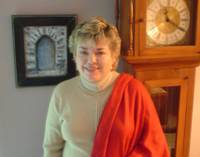
I stand between a clock and a door. Fittingly, I think.
The clock is the last of the many my father made. Solid cherry and a thing of beauty. I recognize that I have become a woman of a certain age and am surprisingly happy about this. My father attained his most valued personal achievements after fifty. So, the clock is hopeful. While it reads twenty past eleven, for all we know, this could be twenty past eleven in the morning! There is still time for me to live. And I have a strong sense that I get to choose whether it is morning or evening, whether my life is at its prime or its end.
And then there is the door, the painting I bought because I loved it. There it hangs, like an invitation. To open doors. To push on doors. To walk through and explore behind doors. To command doors to open. To bang on doors. I am here. To shout with Jacob, "I will not let you go until you bless me."
How fortunate I have been already in life, and yet, I dare to ask for more. I do not stand between a rock and a hard place, but between a clock and a door. Opportunities knocking, tick tocking.
Thursday, January 06, 2005
In the light of the Tsunami
On the last day of the old year I burnt my hand and had a flat tire. It seemed a fitting end to a year in which sickness had touched every single member of my immediate and much of my extended family. In my New Year's prayer it seemed unbelievable, a disease for each member: mono, skin cancer, ulcerative colitis and pericarditis, difficult pregnancy, depression, arthritis, alzheimer's, benign tumour, rectal bleeding. I could go on. Suffice it to say, the family, grouped in solemnity over this list of woes, collapsed into laughter. Mash humour. The release of pent up anxiety after the worst is presumed over.
In the light of the Tsunami, everything else seems absolutely trivial. Now, nearly two weeks after that tragedy, the world still reels and rocks itself, mourning the innocent loss of life, the enormity of death, dislocation and destruction. It seems this event will not leave the front pages soon. It puts suicide bombers in their place. It stops us in our trail of consumption and causes us to open our wallets and hearts.
In the aftermath of the Tsunami, we examine our beliefs. The problem of pain as a serious theological issue raises its head yet again. We ponder the notion of a good God in the light of catastrophe...not manmade, this time, but arising from the depths of the sea, part of God's creation.
In the lesson of the Tsunami, we are caused to consider the God who became flesh and dwelt among us, who suffered and was tempted in all ways as we are, who spent his life amongst the sick, the poor and the dying, and who died a painful, seemingly unnecessary death by torture. That Christmas word, Immanuel, God with us, gains significance. And the name Jesus, God is salvation, adds a layer of meaning. God saves by participating in our humanness and pain.
The burns on my hand are beginning to crust over, a sign of health and survival. I can type this without pain. These are wounds not worth mentioning in the light of the Tsunami. Then again, they are like a token to remind me to pray for wounded ones everywhere...for those caught up in earthly forces beyond their control, for those deluded by dogma into sacrificing life for ironclad prinicples, for those whose wealth pretends to cloak them from trauma, for those whose poverty exposes them to more than their fair share, for those who sensitive hearts leave them open to wounding by word as well as deed.
My fleshly wound reminds me I am not invincible. I share the human condition. I am wounded and I wound. In particular, I can wound by ill considered and hasty remarks, lack of sensitivity to my family, ill temper. For these pains, I repent and ask pardon and go on, praying to do better in the New Year. In the light of the Tsunami, this is the very least which I can do.
Tuesday, December 28, 2004
Pray
Pray.
Pray gently.
Pray with intensity.
Dig.
Dig deep.
Dig for resources.
Stand.
Stand firm.
Stand for humanity.
Weep.
Weep fiercely.
Weep with compassion.
Pray gently.
Pray with intensity.
Dig.
Dig deep.
Dig for resources.
Stand.
Stand firm.
Stand for humanity.
Weep.
Weep fiercely.
Weep with compassion.
Sunday, December 26, 2004
The Quilt Project
Quilt

Inspiration: Harrison/Agassiz Community Quilt, Hotel Harrison, Harrison British Columbia
2004 has been a year of expanded awareness for me. It began with a trip to Bulgaria, not your average tourist destination. With a group of other women from Global Action Canada, I discovered God's heart for suffering women in Bulgaria and in Canada. I brought back with me an increased compassion and a growing vision for how individuals might make a difference to the human condition.
In August I led a small art workshop for young adults at a summer camp for the arts hosted by The Salvation Army. There the enthusiasm of young people permeated everything, and God's Spirit was was expressed in creative arts and in discussion, particularly as we looked at issues beyond our own narcissism, and focused attention on what we might do in the world.
In November, a trip to British Columbia refined my personal vision and moved me forward in my spiritual journey. My task was clear: to express my gifts through conceiving and birthing Beauty. But how was this seemingly esoteric goal to link with the urgent claims of the world?
Within days, a trip to the hot springs at Harrison, British Columbia supplied the first answer. The result is The Walker's Point Community Quilt Project, a thing of beauty, and a means of raising money for children at risk in Tanzania. The little church I've been writing about in my last few blogs, partnering with Global Action (vision) and The Salvation Army in Tanzania (facilitation) is sponsoring this project. Families and businesses within our small community will prepare quilt squares which, for a small fee, will be included in the large quilt. The money will go to house children who have been orphaned by war and Aids in Tanzania. The quilt will hang in our local Community Centre as a snapshot of the history of the community.
Thus do the strands of experience, insight and inspiration connect to form a pattern, something elegant and beautiful, reflecting humaness and the heart of God.
I hope to facilitate further quilt making projects. The next will be the Linwood House Quilt Project to raise money for a safe house for women in Bulgaria/Eastern Europe. Watch this space for progress, as well as the Global Action website http://www.globalactioncanada.org/default.cfm.
Quilt 2

Detail showing block styles, Harrison/Agassiz Community Quilt
Quilt 3

Detail showing block styles, Harrison/Agassiz Community Quilt
Saturday, December 25, 2004
A Midnight Clear
Christmas Eve was clear and cold. A near full moon rode high in the sky, silvering deep snow and weighted boughs, and casting the dark shadows of bare black branches across the road. A deer, full grown and huge, perhaps the one who visited at church a year or two ago, met us on the road. He stood his ground. We swerved and screamed and whispered thanksgiving. Strange how shadows and branches and antlers blend. One moment the way is quite clear and the next, a woodland creature is standing sentinel right in the path. I wonder how this deer told his tale, when all the animals gave voice at midnight?
Our impromptu nativity went quite well. Some of the children we expected didn't show up, but others came in their place. My own wee grandchildren sprouted angels wings and acted their parts as they perched on sheet draped chairs. Some older kids helped out, and four children I had never met before took roles as wiseperson, shepherds and lamb. The lamb was most touching of all. He really got into the spirit of the thing, curling up in fetal position at the infant Jesus' feet. This lamb child, from a simple country family, had the absolutely right response to the Christmas story. Peace. Then too, "I a child and Thou a lamb"...a William Blake moment.
Oh yes, and our live baby Jesus was a no show. The instant 'baby' I crafted out of rolled sheeting and soft 'lambskin' looked realistic enough...better than a doll really, which sometimes has that stiff fake look. The actors were suitably reverent, and the audience managed a credible "suspension of disbelief." Indeed I thought the wiseperson carrying myrrh was never going to get up off his knees. We could have closed in prayer right then and there.
In fact, it was magical. Worthy. Well worth a couple of sleepless nights getting costumes assembled. And I'm grateful for the eternal relevance of the Christmas story, for the innocence of children, for their eagerness and creativity, for the child-like capacity to invent, and be real in the moment. I'm grateful for the clarity a simple staging of an old story brings, and for the heightened awareness of an encounter with a deer by moonlight.
Tuesday, December 21, 2004
Authenticity and the Impromptu Nativity
I attend a very small, rural, non-denominational church. The building is an old red brick schoolhouse set back against a hill and surrounded by bush. It is a strikingly beautiful place, perhaps because of its rough hewn qualities. During service in winter, we look out huge windows at snow laden trees. One Sunday morning a deer dropped by in search of winter grazing.
The Christmas candlelight service has always been special. The place is packed with local families and cottagers visiting the area for a unique Christmas experience. But because our church does not have "programs" such as a Sunday School, it has always been a challenge to include elements in the service which will appeal to the children gathered. Last year we did an impromptu Christmas acrostic. The children loved doing it, fresh and unrehearsed, with a good narrator to carry them along. This has emboldened me, this year, to try an impromptu Nativity.
So the script is written, a little freshness, a little tradition. We are having wisepersons this year, since I suspect a girl or two may have to bear in gifts. The costumes are assembled, mostly, just bits and bobs, material to drape, hats and canes to don and carry. And, all unrehearsed, the Holy Family, the baby Jesus (seven months old at last reckoning), the angels, star, shepherds, sheep and wisepersons will assemble at the front. A bale of hay will stand for the stable. Totally unrehearsed, the children will do it, I trust, and they'll bring to the familiar story a freshness which can only be born of their own enthusiasm, and the authenticity of their youth and faith.
Of course, on the first Christmas, no one had time for rehearsals either. They had to take it as it came. The pain, the blood, the cold and exposure, the shock and surprise, the joy, the love, the simple pleasure of friendly fellowship, the awe of worship and the symbolism of gifts. Just as it came. Authentically.
So, this is how I face Christmas this year. Just as it comes. A little more simply. A few less gifts. Some goat equivalents mailed out. Simpler decorations and a come what may attitude. I'm for an authentic Christmas. And if the angels giggle a little, or the shepherds forget to kneel, it will be real, unrehearsed, an improvisation, just like the first Christmas.
Oh God, let the sheer humanity, the holy reality of it, the authenticity of it, soften hard hearts and heal broken ones. Let it be!
Friday, December 17, 2004
Out of the mouths
My grandaughter, Rachael, (not infrequently mistaken for my daughter, of course) is three years old. She is a charmer who enchants the residents at my mother's Senior's Home. This week she paid her Christmas call, running about, hugging folk at the knees, eating Christmas cookies and talking to everyone. She calls them "all the grandmas", and I'm certain the odd man doesn't mind.
"Where does Santa live?" asked Yvonne, my mother's tablemate.
"At the North Pole," shouted Rachael, finger pointing authoritatively.
"I bet she doesn't know where Baby Jesus lives," regretted Yvonne.
"I bet she does," I retorted. "Try her."
"Where does baby Jesus live?" Yvonne inquired doubtfully.
"At my Nana's house," replied Rachael, not missing a beat.
"I thought she'd say, 'at church'," pondered Yvonne.
Ahah, I thought, Rachael is quite right. If baby Jesus lives anywhere, he lives at Nana's house, and at Rachael's own house too, and at your house. There may be cathedrals where he is worshipped, temples where he is praised, but if he lives anywhere he is lives in the homes, the hearts and the actions of his people.
Thursday, December 16, 2004
First Month on the Blog
I've been writing here for about a month. I'm so thankful to Lisa for getting me going and to Bulgaria buddies and Linwood connections for suggesting that this might be an edifying way for me to spend my time.
This is what I've discovered about blogging:
1. This is a useful prayer tool. It helps me focus on needs worldwide.
2. It keeps me constantly aware of the nature of the Divine, of Light and Dark and of the battle we wage for wholeness, understanding, compassion, and purpose.
3. It has helped me feel less lonely in the struggle to emerge with a new voice and a new message.
4. It has renewed my passion for writing and has encouraged me to see my words as worthwhile.
5. It has given me an added reason to get up in the morning. I seem to need less sleep, less food, and have dropped THREE POUNDS!
Thanks to all who share heart and soul. You teach me.
Friday, December 10, 2004
The Comfortable Forgetting
There are some things one forgets, not necessarily on purpose, but "out of sight, out of mind." This, I think, is a blessing. Birth pains. The hideousness of passport photos. The sweetness and embarrassment of that first kiss. Tooth ache. The extra twenty pounds of weight about the hips. Stomach flu. And snow.
You would think that living half way to the North Pole in a place esteemed for being Santa's summer playground, I would never forget snow. Not so. In the green months, the lush months, I forget the feel of ice underfoot. Can't even imagine it. Even in the crispy, smokey months the thought of snow is impossible. The freezing sting of it is beyond comprehension. Slippery mush is mirage on roads that are clear and dry.
And then it hits. The first sticker. The big blow which is not going away for three or four or five months. Travelling is suddenly dangerous. Drivers, fearful of the stuff, climb hills slowly, fail to make the grade and slide down again. Cars cluster at intersections. Trucks slide off into ditches. Visibility drops to zero. Fog restricts vision in places where water has yet to freeze. People sit, gripping the seat, as someone else drives, always too rapidly.
How could this be forgotten? Skating along mainstreet. Holding onto buildings for support in the blizzard. On-ing and off-ing boots, coats, scarves, hats, mittens. Buying sand at Canadian Tire. Buying long underwear at the Bay. Sweating indoors. Freezing outdoors. Eternally exhausted by the battle against the elements. I think, why didn't I move somewhere warm while the going was good?
Stuck. Here. For another season. Ho. Ho. Ho. I forgot, when things got comfortable that there are four seasons at the 45th parallel. And one of them is cold. Just remind me of this when dandelions and black flies come again, I'll not complain.
Blessings, Connie
Sunday, December 05, 2004
Past in the Present
At Christmas, like Mr. Ebeneezer Scrooge, I confront my past in the present. Each year, the rolling round of the season offers up another opportunity to explore memories peaceful and painful; to call up the person I was and to accept more fully the person I am becoming.
I have more than the average number of poignant, hilarious and even downright scarey Christmas memories, enough for a book. For most of my life, I was involved with an organization which is a Christmas icon, and it was this association which created the context in which I lived out my Christmases. In fact, for some years, I myself was a Christmas icon, receiving generous gifts for charity and listening to the reminiscence, praise, complaint, fear, longing, grief and expectation of those who lingered around my post. It was a valid thing to do at the time, and not without personal rewards. But it came to an end, and I moved on.
I hardly grieved the loss of Christmas, so eternally rooted for me in good works, Christmas concerts, baskets for the poor, Church suppers, carolling, carolling, carolling. But it was a loss. When I changed employment I was unable to sing a single Christmas carol. I was all sung out. Every tune seemed overfamiliar, every sentiment maudlin, overhyped and stale. I had worn out Christmas. I felt sceptical of the needy and fed up to the teeth with the rich. I, along with a huge segment of Western population, gave up the practice of communicating with friends at Christmas. I could barely cook a turkey. I started handing out cash instead of making ties, candles, wreaths, decorating potted plants and other trinkets as gifts. Christmas had become a very bad, very heavy thing to me. I was turning into Scrooge.
It is a relief now, fifteen years on, to look back and not be tired. Not that I want to recreate it all. I don't ever want to be that busy at Christmas again. But recently I've been able to sing again. I'm able to reclaim the best of my past, to celebrate it and honour it. "The Holly and the Ivy" has regained its celtic mystery laced with the deepest Christian symbolism. The Basque lullaby, "The Infant King", is touched again with simplicity, humanity, reality. "How far is it to Bethlehem?" glows with childlike hopefulness, the eager expectation of a new baby.
Perhaps it is that this year, at Christmas, we expect a new baby in our family. Perhaps I have opened my heart, just a little bit, to let in what is tenderest, most precious in my heritage. Perhaps I have accepted that it was not all bad, all those years of busyness. Indeed, much of it was jolly entertaining. Duty kills joy. Love revives joy. I look kindly at the past, and smile at my infant self, and hug the exhausted woman she became and celebrate the joyful woman she is becoming.
This is the thing about Scrooge...his last name being a Dickensian invention has come to symbolize meanspiritedness. But his first name...well that means, "up to this point God has guided us." Neat.
That means that nothing is lost. The past can be redeemed in the present. There are second chances and thirds and fourths. Looking at my life, I begin to see the hand of Creator God in all my past. No regrets now. Hey, Ebeneezer!
Subscribe to:
Posts (Atom)
